Product-Oriented, Sales-Oriented or Marketing-Oriented? Where Real Growth Actually Starts
The difference between product-oriented, sales-oriented and marketing-oriented companies is not what they do. It is where they start. And that starting point shapes positioning, demand, conversion and growth.
Key takeaways
- Product-oriented companies start from the product, sales-oriented from the sale, marketing-oriented from the market and customer.
- No single orientation is wrong — the problem is one-dimensional thinking that locks the company into one lens.
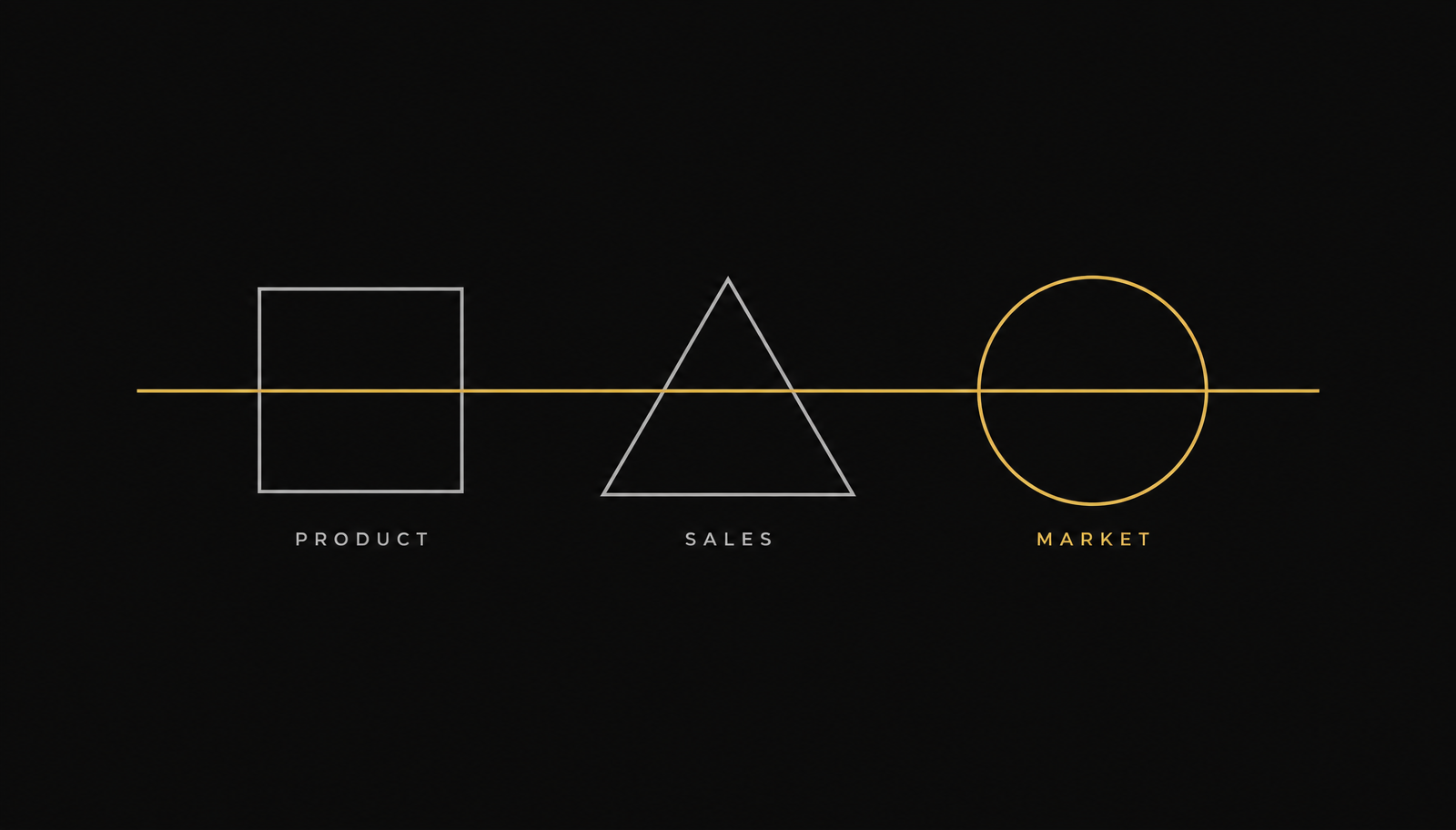
- The strongest companies are market-led: they orchestrate product, sales and marketing around the customer.
- The 5C Growth Framework — Clarity, Creative, Conversion, Channels, Calibration — turns orientation into a working growth system.
The real difference between a product-oriented, sales-oriented and marketing-oriented company is not simply what each one does well. It is where the company starts its thinking.
A product-oriented company starts with the product. A sales-oriented company starts with the sale. A marketing-oriented company starts with the market and the customer. That starting point shapes almost everything: positioning, messaging, customer experience, funnel design, sales behaviour, channel strategy, measurement and ultimately growth.
The core difference
A product-oriented company asks: “How do we build a better product?” A sales-oriented company asks: “How do we close more deals?” A marketing-oriented company asks: “What does the market need, who are we serving, why should they choose us, and how do we turn that value into profitable growth?”
The product-oriented company says: “Look at what we built.” The sales-oriented company says: “Buy it now.” The marketing-oriented company says: “We understand what you need, we have designed something that creates value for you, and we can show you clearly why we are worth choosing.”
What is a product-oriented company?
A product-oriented company starts from the product. Its core belief is: “If we build a great product, the market will buy it.” It focuses on quality, features, technology, design, production, innovation and continuous improvement, and believes that product superiority is the main driver of growth.
That belief creates real strength. Many remarkable companies are built on exceptional products. Without genuine value, marketing eventually exposes the weakness instead of covering it. But product strength alone does not guarantee market success — the market buys what it perceives as most relevant, useful, trustworthy and suitable for its needs.
What product-oriented companies do well
- Invest seriously in research and development.
- Build technical superiority and improve features continuously.
- Focus deeply on quality and craftsmanship.
- Innovate and create products with depth and substance.
Where they get stuck
The classic mistake sounds like this: “We have the better product, so customers should choose us.” But customers ask different questions: Do I understand this? Does it solve a problem I recognize? Can I trust this company? Is the decision easy? If the product is strong but the positioning is weak, the market does not see the value.
Example: a SaaS company keeps adding features. The roadmap is impressive, the technology is strong — but customers do not use the new features. Not because they are bad, but because they do not understand the value or see how it changes their daily work. The issue looks like product adoption. In reality it is Clarity, Creative and Conversion.
What is a sales-oriented company?
A sales-oriented company starts from the sale. Its core belief is: “If we push sales hard enough, we will generate revenue.” It focuses on salespeople, follow-ups, calls, offers, discounts, closing and short-term revenue. It wants pipeline, deals and revenue now.
That can be powerful. Many companies suffer not from a lack of ideas but from a lack of commercial discipline — a strong sales culture creates speed, accountability and results. But there is a limit. If a company sells without creating real demand, trust and differentiation, sales becomes pressure. And pressure has a cost.
Where they get stuck
- Heavy dependence on discounts and aggressive selling.
- Weak customer loyalty and poor repeat business.
- Low-quality deals and inconsistent revenue.
- Sales team fatigue and brand erosion.
Example: a services company keeps increasing sales targets. The team makes more calls, sends more proposals, follows up more often. But positioning is unclear, leads are not qualified, the website does not explain the value, and prospects only buy when there is a discount. The issue looks like a sales productivity problem. In reality, it is a growth architecture problem.
What is a marketing-oriented company?
A marketing-oriented company starts from the market and the customer. Its core belief is: “Let’s first understand who we serve, what problem we solve, why customers should choose us, and how we can create value in a profitable way.” It does not treat marketing as advertising — it treats marketing as the business function that understands the market, shapes demand and aligns product, brand, sales and experience.
Marketing in its mature form is not the department that “creates posts.” It is the discipline that helps the company answer: Who do we serve? What problem do we solve? Why does it matter now? What makes us different? What friction stops people from buying? Which channels shape the decision? How do we turn interest into revenue and learn continuously?
Where they get stuck
The danger of a marketing-oriented company is becoming too theoretical — endless decks, research and workshops without execution. Market understanding has to lead to better decisions, better products, sharper messaging, better offers and better conversion. A mature marketing-oriented company does not just analyze the market. It acts, tests, measures and improves.
Product-oriented vs sales-oriented vs marketing-oriented: a simple comparison
- Product-oriented — Starts from the product. Asks: How do we build something better? Main risk: ignoring the market.
- Sales-oriented — Starts from the sale. Asks: How do we close more deals? Main risk: pushing without creating demand.
- Marketing-oriented — Starts from the customer and the market. Asks: What value does the market need, and how do we turn it into growth? Main risk: staying strategic without execution.
The strategic truth: the problem is not the orientation, it is one-dimensional thinking
A product-oriented company is not wrong — you need a strong product. A sales-oriented company is not wrong — you need commercial intensity. A marketing-oriented company is not automatically superior just because it talks about customers and positioning. The problem begins when a company becomes one-dimensional.
A company that is only product-oriented may have an excellent product but weak positioning. A company that is only sales-oriented may generate revenue but create fatigue, discount dependency and low loyalty. A company that is only marketing-oriented may have strong strategic thinking but slow execution. The strongest company is market-led and growth-oriented — it orchestrates product, sales and marketing.
How this connects to the 5C Growth Framework
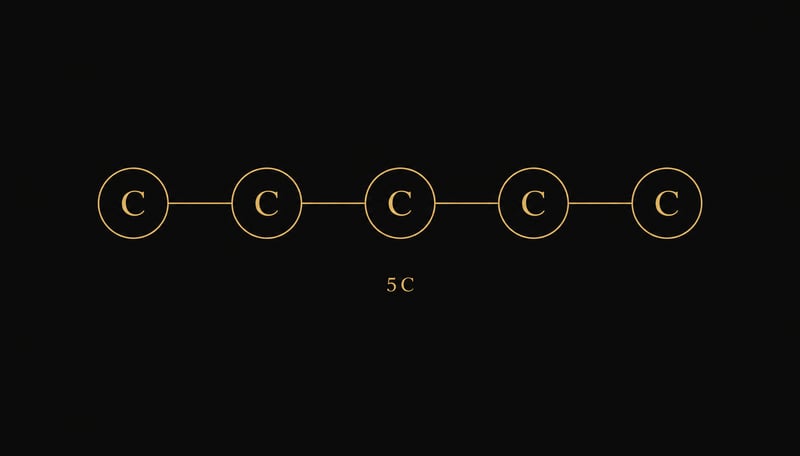
At DAY ONE, we see growth as a system, not a list of disconnected tactics. Through the 5C Growth Framework, a mature company starts with Clarity and then connects the full growth architecture. The five Cs are not silos — they work as a continuous loop: Clarity informs Creative, Creative drives Conversion, Conversion depends on Channels, Channels are optimized through Calibration, and Calibration feeds back into Clarity.
1. Clarity
Who do we serve? Why do they choose us? Without Clarity, the product-oriented company overinvests in features, the sales-oriented pushes the wrong leads, and the marketing-oriented becomes generic.
2. Creative
How do we make our value visible, distinctive and relevant? Creative is not decoration — it is where strategy becomes visible to the market.
3. Conversion
How do we turn interest into action, customers and repeat purchase? Traffic without conversion is expensive noise. Sales without a conversion architecture becomes pressure.
4. Channels
Where is the customer? Where is the decision shaped? Channels should be chosen from customer reality, not from FOMO.
5. Calibration
What do we measure, learn and change? Without Calibration, the company does not learn — it just spends and hopes.
From product-led and sales-led to market-led growth
The shift many companies need is not to stop caring about the product, or to stop selling. It is to stop starting from the inside out. Product-oriented thinking starts inside: “This is what we built.” Sales-oriented thinking starts inside: “This is what we need to sell.” Market-led thinking starts outside: “This is what the market needs, what the customer understands, what reduces risk, what makes the decision easier.”
That is not softer. It is more commercial. Because when you understand the market better, you can design a better product, a sharper value proposition, a stronger sales process and a more effective growth engine.
The CEO question: where does your company really start?
- When we make decisions, do we start from the product or from the customer?
- When sales slow down, do we push harder or diagnose where friction exists?
- When we build messaging, do we talk about features or value the market recognizes?
- When we choose channels, do we follow trends or understand where the buying decision is shaped?
- When we measure marketing, do we look at vanity metrics or business outcomes?
If the answers show that your company operates mainly from product or sales, you may not need more campaigns. You may need better growth architecture.
The real difference
A product-oriented company can build something excellent. A sales-oriented company can sell something quickly. A marketing-oriented company can understand what the market needs and design how value becomes demand, demand becomes conversion and conversion becomes growth. But the strongest company connects all three.
Not product without market. Not sales without demand. Not marketing without execution. But one connected system where product, market, sales and marketing move in the same direction.
Frequently asked questions
- What is a product-oriented company?
- A product-oriented company starts its strategy from the product. It focuses on quality, features, technology, design, innovation and continuous product improvement. Its main risk is assuming that the best product will automatically win the market.
- What is a sales-oriented company?
- A sales-oriented company starts from the sale. It focuses on targets, follow-up, offers, discounts, closing and short-term revenue. Its main risk is pushing for sales without building enough demand, trust or differentiation.
- What is a marketing-oriented company?
- A marketing-oriented company starts from the market and the customer. It focuses on understanding who it serves, what problem it solves, why customers should choose it and how to create value profitably.
- Which orientation is best for growth?
- The strongest approach is not purely product-oriented, sales-oriented or marketing-oriented. The strongest companies are market-led and growth-oriented. They combine a strong product, an effective sales engine and deep market understanding.
- How does the 5C Growth Framework help?
- The 5C Growth Framework helps companies see growth as a system. It connects Clarity, Creative, Conversion, Channels and Calibration so the company can diagnose friction, align decisions and improve continuously.
- What does market-led growth mean?
- Market-led growth means the company starts from the customer and the market before deciding what to build, how to sell, how to communicate and where to invest. It does not ignore product or sales — it aligns them around real market demand.
Tags
Share