Are you selling to the customer you had, not the one you have?
NIQ shows spending moving away from mid-priced products towards both value and premium options. The question isn't 'cut prices' or 'go premium' — it's whether your offer still fits today's customer.
Key takeaways
- Spending is moving from mid-price towards value AND premium options — not only towards cheap.
- 'I can't afford it' and 'I don't see why I should pay more' lose the same sale, but aren't solved by the same decision.
- Global research shows what to examine; it doesn't hand you a diagnosis — the picture differs by category.
- 'We know our customer' needs a date stamp.
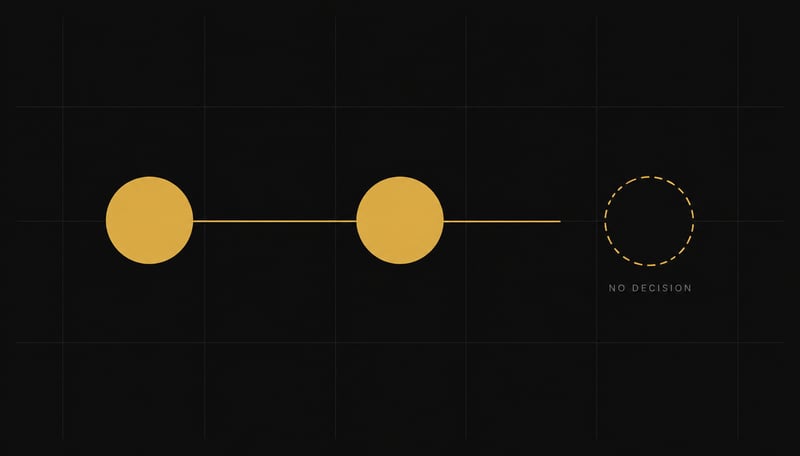
Your customer may understand exactly what you offer. Recognise your quality. Prefer your product to the competition.
And still not buy it.
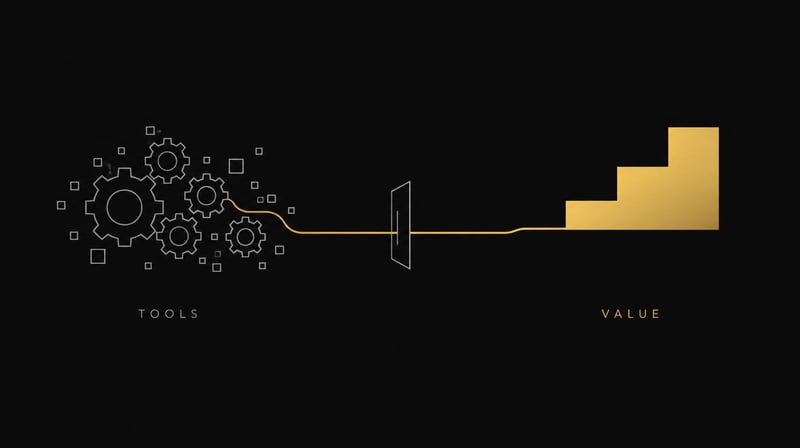
That gap between preference and purchase is where a business can make a very expensive misdiagnosis: assuming the customer needs more persuasion, when in fact their priorities have shifted or they can no longer spend the same amount.
NIQ's new Consumer Outlook: Guide to 2027 offers a useful frame for what is changing in consumer markets. Combining responses from more than 21,000 people in 31 countries with real purchase data, it records a shift that doesn't fit the easy 'people want cheap' story: spending is moving away from mid-priced products towards both value options and premium propositions. (Source: NIQ)
Behind this picture are diverging financial situations and shifting priorities. Some look for real savings. Others still pay more when they believe the benefit justifies the difference. The trend NIQ describes is not a universal move to low prices. It is a market in which different consumers need different reasons to buy. (Source: NIQ)
In the first case, you need to check whether you can offer an affordable and sustainable alternative. In the second, whether the difference you offer is real, important to the customer and sufficiently proven.
So my reading of the findings is neither 'cut prices' nor 'go premium'. It is to check something more fundamental: whether your product, price and promise still match the person being asked to pay today.
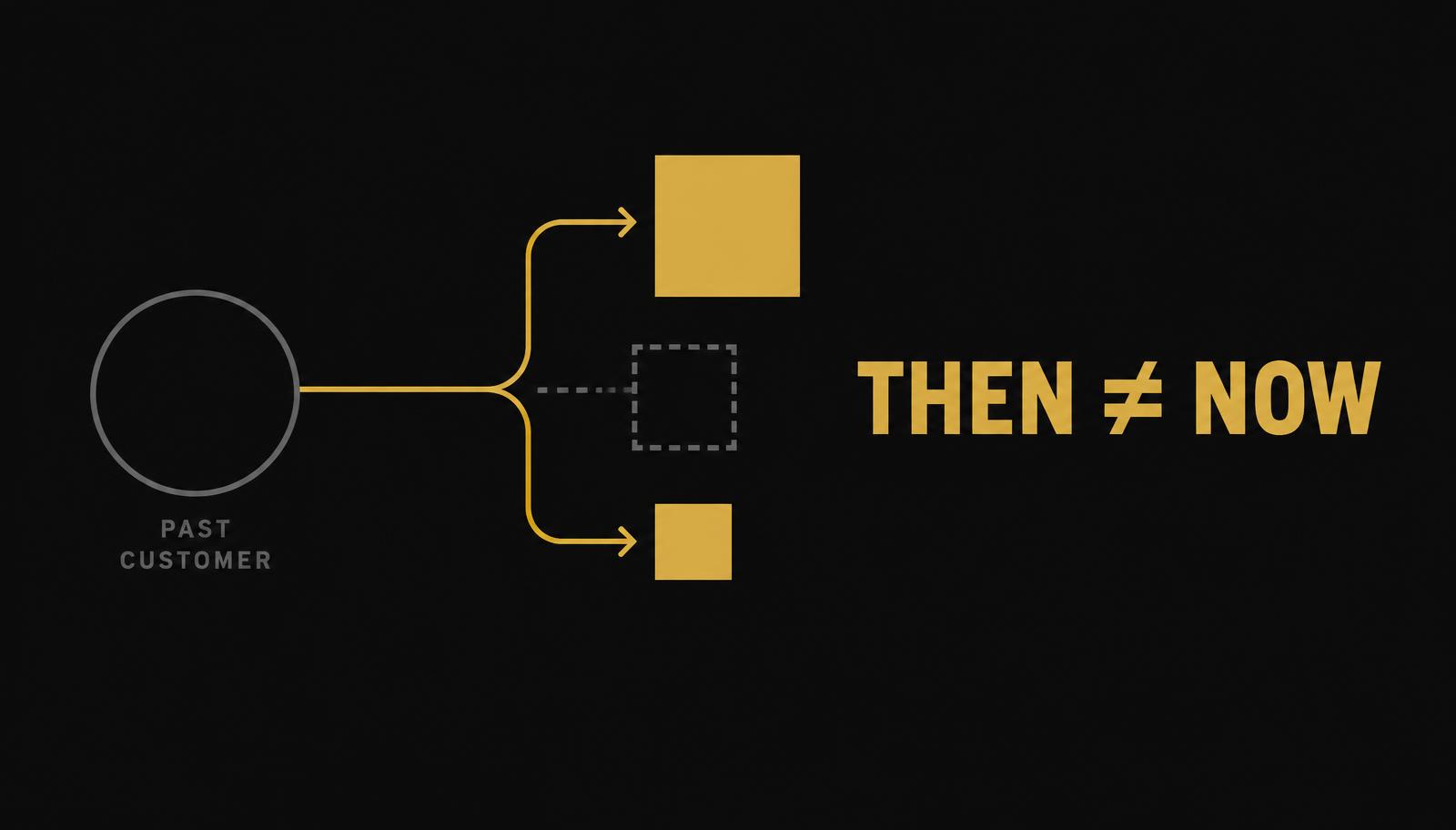
Are you trying to sell better to the customer you had, instead of adapting your offer to the customer you have?
Money isn't all moving in one direction
Two findings help explain the shift.
The first concerns consumers' finances: 34% say they are worse off than a year ago, while 30% say they are better off. Not everyone is living through the same economy. (Source: NielsenIQ Investor Relations)
The second concerns what they buy. NIQ records a shift of more than $23 billion from mid-priced consumer goods towards value and premium options. Not only towards cheaper ones. (Source: NIQ)
The connection matters. The market is not sending a single 'cut prices' message. It reflects different financial conditions and different demands of a purchase: sometimes bigger savings, sometimes more value that justifies a higher price. (Source: NielsenIQ Investor Relations)
It does not follow that every squeezed consumer buys only cheap, or that every comfortable one buys only premium.
For me, the business question is specific: is your offer still a good balance of value and price for your customer? Or is it just the balance you once found?
The Greek shelf warns us not to rush
According to NIQ data for the first half of 2026, as published by Powergame, private label's share of the Greek market was 24.3%, down from 24.4%. In other words, retailers' own brands did not gain overall share in that period. (Source: Powergame)
In the same data, however, private label holds 33.3% in household care and just 8.6% in health and beauty. The picture varies widely by category. (Source: Powergame)
So global research shows you what is worth examining. It doesn't hand you a ready-made diagnosis for your business.
It's not enough to say 'people want cheap'. Nor 'people pay for quality'. You need to learn what your customers consider good enough, where they see a difference and what they are willing to pay for it.
Trading up was already described in 2003 by Silverstein and Fiske in Harvard Business Review. The point isn't to rediscover the theory. It's to understand which behaviour we are actually facing. (Source: Harvard Business Review)
A €60 product. Three completely different decisions.
Take a hypothetical example. You sell a product at €60. Sales are slipping. The team proposes a discount and a new campaign. Before approving anything, consider three different cases.
1. The customer prefers you but can no longer spend €60.
They recognise your quality. They don't need another ad to understand it. They have reduced what they can spend.
Here I would look at a more affordable version: smaller quantity, fewer extras, a simpler solution. Clearly different from the original, with a cost that leaves a sustainable margin.
The decision is about designing an offer they can buy — not automatically a permanent discount on the same product.
2. The customer can pay €60 but feels the €40 option serves them just as well.
Here the problem isn't necessarily their wallet. It's that, by their own criteria, the extra €20 doesn't buy anything important enough.
I would examine exactly what they gain by choosing you. Longer life? A better result? Less hassle? More certainty?
If the difference exists, you must prove it. If it doesn't, you must first create it. Repeating that you are 'quality' doesn't answer the comparison on its own.
3. The customer leaves you for a €90 option.
Here 'there's no money in the market' doesn't describe the decision. The customer is spending more elsewhere. You need to understand what that difference buys: a better experience, expertise, support, more confidence in the result?
I wouldn't automatically raise prices and call the product premium. I'd examine which benefit is missing from my offer and whether I can deliver it profitably. A discount on the €60 product may not address why they left at all.
'We know our customer' needs a date
I would put this phrase in every commercial review. Because the question isn't only whether you know your customer. It's when you last checked that what you believe about them is still true.
They may be the same age, live in the same area and do the same job — a perfect fit for your audience description. Yet what they consider necessary, what disappointed them, what is now enough and where they want to spend more may all have changed.
If you keep treating them only through what you knew before, you risk perfecting the execution of an offer that has lost its relevance.
In the 5C Growth Framework, this is where Clarity starts: who we serve and why they should choose us. Questions that come before the creative idea and the choice of channels.
The hard part isn't always finding a better message. It may be accepting that the product, the price, the service or even the audience you choose to serve needs to change.
Before you approve the next campaign
I would ask the team to answer one question:
Are the customers we're losing buying cheaper, buying more expensive, or not buying at all? And why?
- Start with one specific product or service that is declining. See which customers bought less often, which moved to another of your options and which stopped.
- Talk to people from these groups. Not to resell to them in the same conversation, but to learn what they finally chose and what weighed on their decision.
- Based on what you learn, test one targeted change: better proof of value, a different economic offer, or a meaningful upgrade.
- Judge the test on incremental profit and repurchase, over your category's natural buying cycle. Also check that the new offer isn't just moving existing customers to a lower price without creating enough new sales.
You don't need to redesign the whole business because you read a study. But you do need to check whether it sheds light on something already happening in your customer base.
The conclusion isn't 'cut prices'. Nor 'go premium'. Nor 'advertising doesn't work'. It's to distinguish when you need to explain your offer better and when you need to change the offer itself.
Don't ask marketing to persuade today's customer to buy by yesterday's criteria. Give them a reason to choose you today.
Sources
- NIQ — Consumer Outlook: Guide to 2027
- NIQ press release / Business Wire
- Powergame — NIQ data for the Greek market, H1 2026
- Silverstein & Fiske — Luxury for the Masses, Harvard Business Review, 2003
- Additional: Powergame — Private label and inflation · Powergame — Private label and retailer plans · Proto Thema — Labelling of reduced-quantity products
Frequently asked questions
- Does the NIQ research mean I should cut prices?
- Not necessarily. Spend is moving to both value and premium options. First diagnose whether the customer can't pay or sees no reason to pay.
- How do I tell whether I'm losing customers on price or on value?
- Check whether lost customers are buying cheaper, more expensive, or not at all — and talk to them about what they chose and why.
Tags
Share