Black Friday 2026: What Really Changes for E-Shops This Year?
The battle moves before the click and is decided after checkout
Key takeaways
- ›The new battle, therefore, is not just for the click. It is for inclusion in the shortlist.
- ›For Black Friday 2026, the product feed does not merely support the campaign.
- ›It is built when every system says the same thing.
- ›Real outcome = Profitable demand × Reliable execution
- ›Black Friday 2026 requires a shared commercial dashboard, clear decision owners and one consistent operational truth.
Black Friday 2026 does not need another checklist of advice such as “make sure your site is fast”, “prepare your stock in time” or “start your campaigns early”.
All of these remain essential. But they no longer provide a competitive advantage. They are the minimum requirement for taking part.
The meaningful change this year lies elsewhere: in how consumers discover, compare and choose products. In who now stands between a need and a purchase. And, ultimately, in whether a retailer’s operating system can accurately deliver what its marketing promises.
For years, e-shops tried to win the click.
In 2026, they must first earn a place in a decision that may already have begun — and partly been completed — outside their own environment.
A consumer can ask an AI assistant to recommend “the best laptop under €900 for professional use”, compare models, identify limitations, evaluate offers and create a shortlist before visiting any e-shop. Google AI Mode is already designed for complex questions and comparisons, while Google has announced partnerships with retailers such as Walmart, Shopify and Wayfair, enabling purchases within Gemini in selected cases — initially in the US. Google for Developers
During Cyber Week 2025, Salesforce estimated that AI and AI agents influenced 20% of global online orders, worth $67 billion. “Influenced” does not mean all that activity came directly from a chatbot. It does mean AI already played a meaningful role in research, recommendations or facilitating purchases. AP News
This changes the architecture of Black Friday.
The critical question is no longer just:
“How much traffic can we buy?”
It is:
“Can our product be understood by machines, trusted by consumers and delivered correctly by our operating system?”
1. AI is not another channel. It becomes an intermediary in the decision
Traditional search presented users with a series of links. Users visited different sites, compared information and formed their own final picture.
An AI assistant works differently.
It does not simply present options. It synthesises information, excludes products, organises criteria and shapes a recommended shortlist. In other words, it is not only at the top of the funnel. It can influence the very framework within which the decision is made.
This means the e-shop may appear much later in the journey. Customers may arrive having already decided:
- what type of product they need,
- which features they consider essential,
- what price range they consider reasonable,
- which brands they trust,
- which products they have already ruled out.
Or they may never arrive.
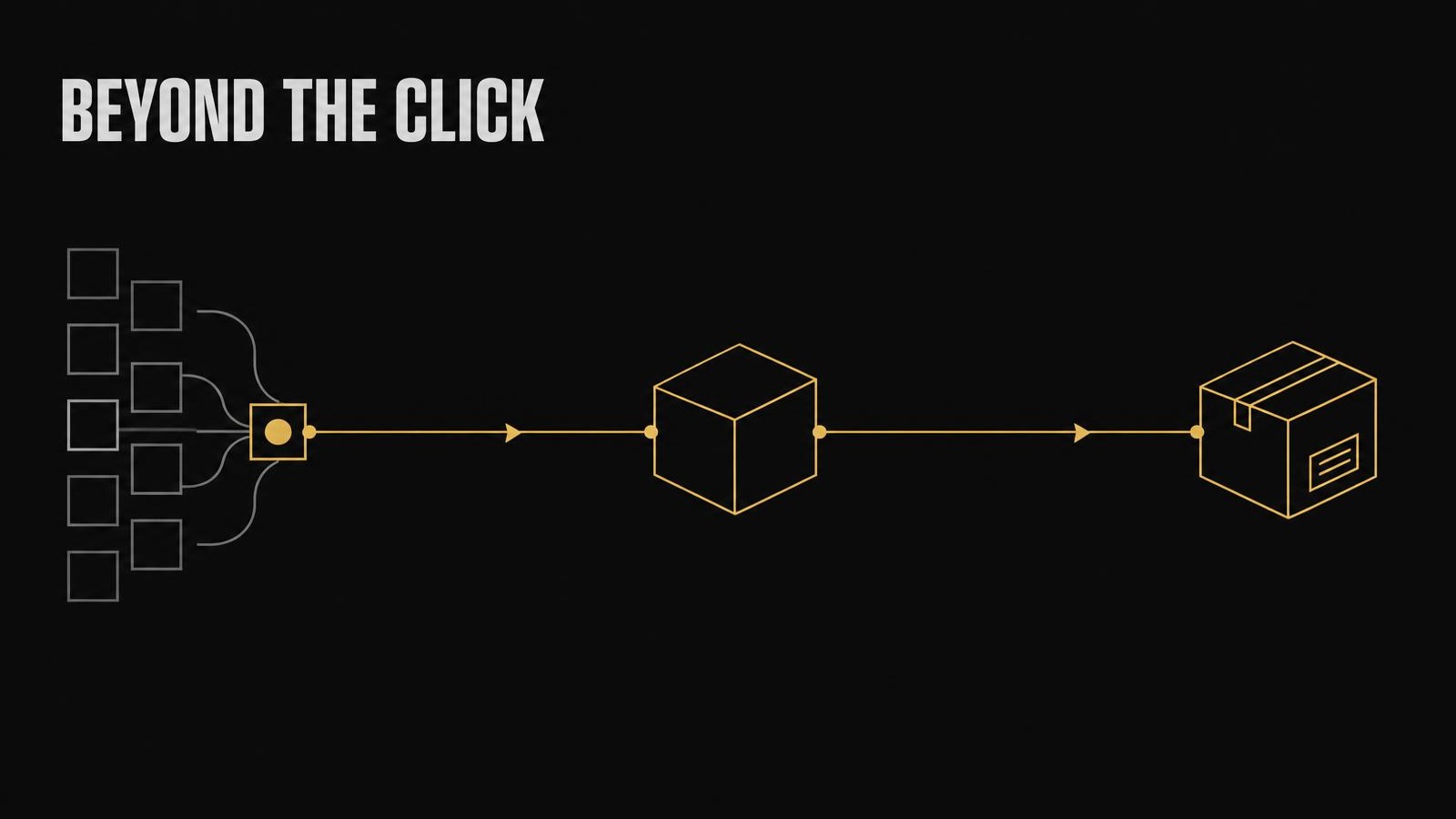
The new battle, therefore, is not just for the click. It is for inclusion in the shortlist.
A note of caution is needed here. No secret “AI SEO” has suddenly appeared. Google itself explains that the basic principles of SEO still apply and no special technical optimisation is required specifically for AI Overviews or AI Mode. Information does, however, need to be accessible, useful, clear and reliable. Google for Developers
So the goal is not to write for machines instead of people.
It is to present the product so precisely that both can understand it.
A good product page should not merely describe what the product is. It should answer the questions customers will use to compare it:
Who is it for? What problem does it solve? What is it compatible with? When is it not the right choice? What are its essential features? What is included in the price? When is it delivered? How can it be returned?
In the era of AI shopping, ambiguity does not just reduce conversion.
It can remove a product from the conversation before a visit to the e-shop even begins.
2. Product data becomes commercial infrastructure
Until recently, many e-shops treated the product feed as a technical file required for Shopping Ads and marketplaces.
In 2026, that way of thinking is restrictive.
The product feed is evolving into a digital representation of the commercial catalogue. It is the structured information that search systems, advertising platforms and AI-powered experiences use to understand what a store sells, at what price, with which features and under what conditions.
Google explicitly states that product data is used to match products with the right queries and is a fundamental input for AI-powered formats and experiences. Incomplete or incorrect information — such as a wrong GTIN, missing variants, problematic images or discrepancies between the feed and the site — can limit eligibility or even prevent a product from appearing. Google Help
At the same time, correct product structured data lets Google understand and display details such as price, availability, reviews, shipping and return policies. Google for Developers
The problem, therefore, is not merely “technical”.
If a product appears available in the feed but out of stock on the page, if its price changes at checkout, if sizes have not been declared correctly or if critical specifications are missing, demand leaks out of the system.
And that leakage can happen without the retailer ever seeing it in their analytics. It is not cart abandonment, because the user never even reached the cart.
Before Black Friday, every e-shop needs to check five things:
- whether the feed, product page and checkout show the same price and availability,
- whether every variant has been represented correctly,
- whether titles and descriptions include meaningful features rather than just commercial slogans,
- whether shipping and return information is clear and machine-readable,
- whether Merchant Center diagnostics are treated as commercial issues to resolve, rather than a matter exclusively for the performance team.
For Black Friday 2026, the product feed does not merely support the campaign.
It is part of the product.
3. The offer must now withstand scrutiny
Black Friday has a longstanding trust problem: consumers do not only assess whether a price is low. They assess whether the discount is real.
The easier it becomes to compare prices, historical data and alternatives, the harder it becomes for a retailer to rely on unclear reference prices, artificial scarcity or exaggerated claims.
In the European Union, every announcement of a price reduction must state the previous price, defined as the lowest price applied by the trader over a period of at least 30 days before the reduction. Eur-Lex
This, however, is not only a compliance issue.
It is an issue of commercial credibility.
A customer may see one price in an AI assistant, another in an ad, a third on the product page and a different final amount at checkout. Each discrepancy removes trust from the system.
The offer must represent one consistent truth at every touchpoint:
- a genuine reference price,
- a clear final price,
- accurate availability,
- a realistic delivery date,
- clear shipping costs,
- an understandable return policy.
Trust is not built with a badge that says “guaranteed lowest price”.
It is built when every system says the same thing.
4. More traffic does not necessarily mean a better result
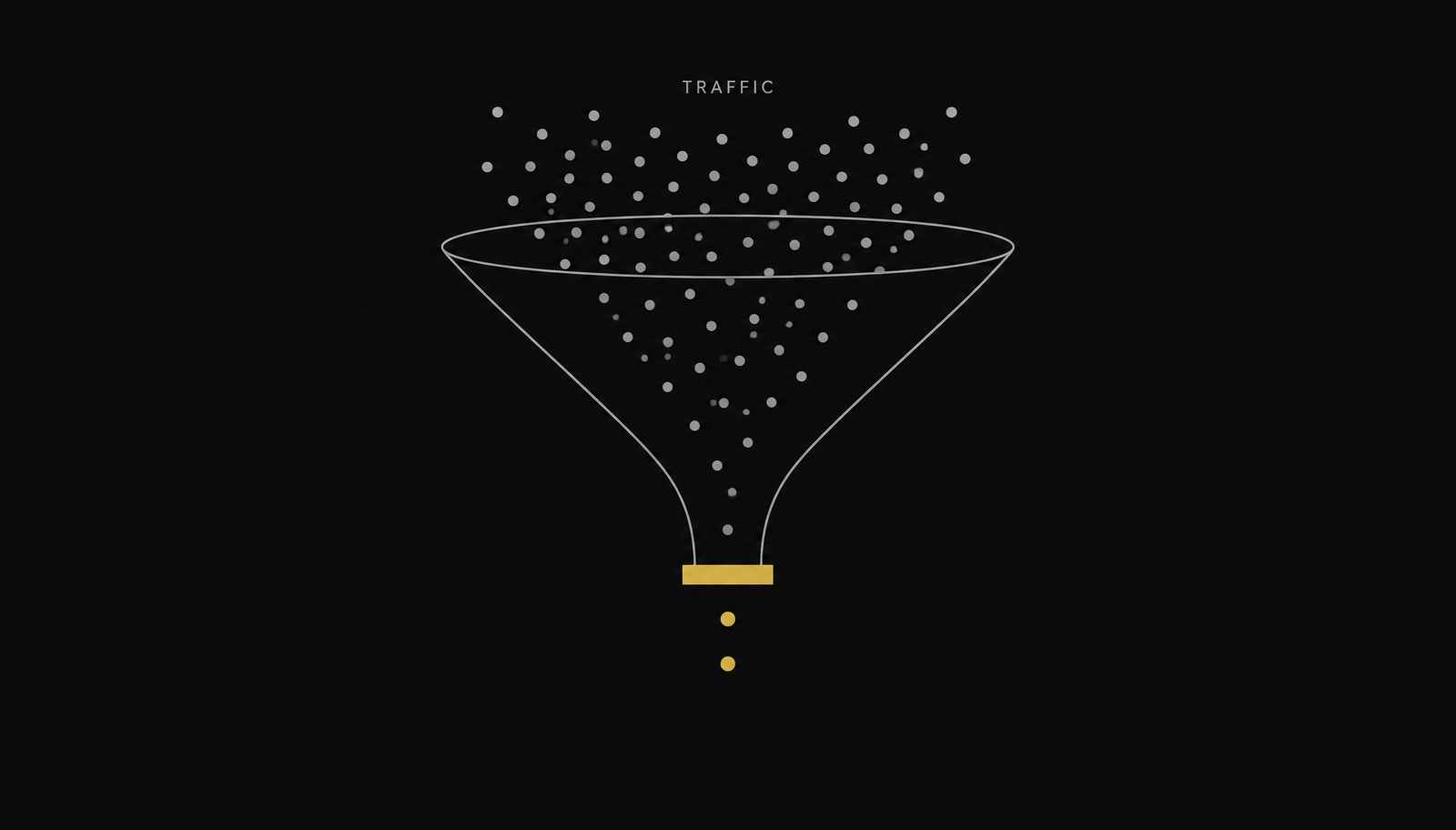
Traffic is the most visible element of a Black Friday campaign.
But it is not the final outcome.
The Baymard Institute estimates the average global cart abandonment rate at 70.22%, based on 50 different studies. Excluding people who were simply browsing and not ready to buy, the main reasons for abandonment include high extra costs, slow delivery, lack of trust, mandatory account creation, complicated checkout and technical errors. Baymard Institute
The conclusion is simple: the media budget can bring customers to the door, but it cannot fix what happens afterwards.
An e-shop can record more visits, more orders and higher revenue while achieving a worse financial result because of:
- deeper discounts,
- increased media costs,
- lower margins,
- free shipping,
- more cancellations,
- more returns,
- higher customer service costs,
- exceptional fulfillment expenses.
That is why the right equation is not:
Black Friday Success = Traffic × Conversion
It is:
Real outcome = Profitable demand × Reliable execution
If demand is high but every order creates little or negative margin, the outcome is problematic.
If demand is profitable but the system cannot deliver, the outcome still collapses.
The management dashboard should not only show ROAS, conversion rate and total revenue. It should include contribution margin per order, cancellations, stockouts, fulfillment costs, on-time deliveries, returns and the net result after the purchase cycle is completed.
Revenue shows how much the system moved.
Margin shows whether it moved in the right direction.
5. Omnichannel becomes an execution mechanism — not a marketing term
Omnichannel has been used so often that it frequently sounds like just another theoretical marketing concept.
During Black Friday, however, it gains very specific operational value.
If the e-shop, physical locations, central warehouse and marketplaces see different pictures of the same product, the retailer does not have an omnichannel operation.
It has multiple versions of the truth.
By contrast, when available stock is treated as a single pool, the business can direct each order to the location best equipped to fulfill it. It can use click & collect, ship-from-store, local availability, alternative collection points and returns at physical stores.
Omnichannel, in this case, is not a communications strategy.
It is an architecture of resilience.
This need becomes even more important because an AI recommendation may — as a reasonable business consequence of AI assistants’ increasing influence — create sudden demand for a product that is not at the centre of the retailer’s planned campaign. Demand no longer comes exclusively from channels the business controls.
That is why tracking inventory through weekly reports is not enough.
Black Friday needs real-time visibility and predefined decision rules:
What happens when available stock falls below a threshold? When does a campaign stop? When does the delivery promise change? When is fulfillment transferred to another store or warehouse? Who has the authority to make the decision without waiting for multiple approvals?
During a peak period, decision-making speed is part of the customer experience.
Black Friday no longer belongs only to marketing
The biggest mistake a retailer can make this year is to treat Black Friday as an advertising campaign.
It is not.
It is a complex commercial event where the following come together:
marketing, eCommerce, merchandising, pricing, product data, IT, inventory, logistics, customer service and finance.
If marketing increases demand without knowing availability and margin, it creates pressure rather than growth.
If operations prepare without knowing when and where the campaign will peak, they operate reactively.
If customer service does not know the precise offer, exceptions and actual delivery times, trust is lost at the first contact.
If finance sees only revenue rather than net contribution, the company may celebrate a “success” that actually destroyed value.
Black Friday 2026 requires a shared commercial dashboard, clear decision owners and one consistent operational truth.
The real challenge is coherence
Black Friday 2026 does not bring a new secret about discounts.
It brings a deeper change in the buying journey.
Customers may discover a product through ChatGPT, Gemini or another AI environment. They may compare it without visiting ten different sites. They may arrive at the e-shop having already formed a view of its price, features and alternatives.
And when they arrive, they expect reality to match what they were promised.
That is why this year’s competitive advantage has three layers:
Be understandable to machines.
Be trustworthy to people.
Be executable as a business.
A deep discount can buy attention.
It cannot fix a faulty feed, nonexistent stock, an unprofitable basket or an unfulfilled delivery promise.
The best e-shop will not be the one that shouts “-50%” the loudest.
It will be the one whose promise remains true — from the first AI recommendation to the last parcel.